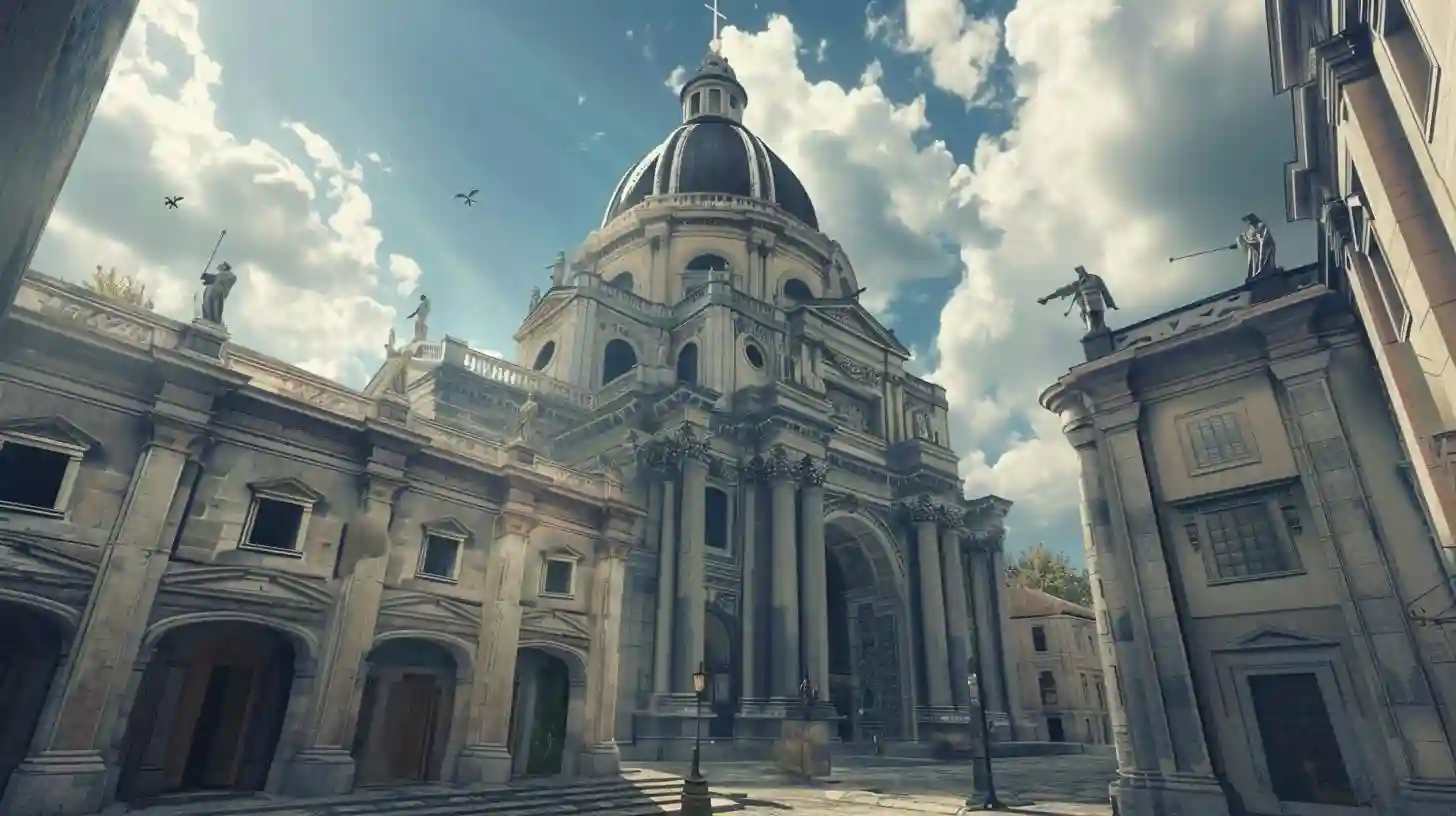
The Isakievsky Cathedral, known as St. Isaac's Cathedral in English, stands as a monumental symbol of St. Petersburg, Russia. With its remarkable architecture and rich history, it serves not only as an important place of worship but also as a significant cultural and historical landmark. The cathedral, dedicated to St. Isaac of Dalmatia, who is celebrated as the patron saint of Peter the Great, reflects the aspirations and grand vision of the Russian Empire during a period of significant transformation and growth.
Construction of the cathedral commenced in the early nineteenth century, specifically in the year eighteen hundred and eight, under the direction of architect Auguste de Montferrand. Montferrand was chosen for the ambitious project due to his innovative ideas and expertise. His architectural vision was marked by an unwavering commitment to both artistic beauty and structural integrity. The cathedral was built on the site of an older wooden church that had served the community for many years. The earlier structure was deemed inadequate for the growing population of St. Petersburg, prompting the need for a larger and more magnificent place of worship.
The cathedral's design draws heavily from classical styles, particularly those of ancient Greece and Imperial Rome. With its striking neoclassical façade, St. Isaac's Cathedral exudes an air of grandeur that is both inviting and imposing. The massive dome, one of the largest in the world, rises to a height that can be seen from various points throughout the city. It is crowned with a golden cupola that reflects the sunlight, creating a dazzling spectacle against the often gray skies of St. Petersburg. This dome is supported by robust columns that line the entrance, each made from exquisite materials such as red granite and bronze, showcasing the ingenuity of Russian craftsmen.
Inside the cathedral, visitors are treated to a feast for the senses. The interior is adorned with a wealth of decorative arts, including marble, mosaics, and frescoes, that all contribute to the overall aesthetic experience. The cathedral features over a hundred different types of marble, sourced from various parts of the Russian Empire. The color and texture of these stones create a stunning contrast with the intricate artwork that lines the walls and ceilings. Among the most noteworthy features are the breathtaking mosaics that depict biblical scenes and saints, executed with a level of artistry that captures the eye and heart of every observer.
The cathedral was completed in eighteen thirty-five, marking the end of the monumental construction phase, but work on its interior continued for several more years. The cathedral's consecration was a significant event attended by numerous dignitaries, reflecting its importance to the Russian Orthodox Church and the state alike. St. Isaac's Cathedral served as a key site for important religious ceremonies, including the enthronement of emperors and other significant state functions. During this period, it became not only a spiritual center but also a space that intertwined faith with the political life of the nation.
As the years went by, the cathedral underwent several transformations and faced numerous challenges. The dramatic upheaval of the Russian Revolution in nineteen seventeen brought about significant changes in the fabric of Russian society. With the rise of the Bolshevik regime, a series of reforms aimed at reducing the power of the church followed. St. Isaac's Cathedral was closed to worshippers in the early nineteen twenties, and the building was repurposed as a museum, which marked the beginning of a new chapter in its history.
During these tumultuous times, the cathedral stood resilient as both a physical structure and a symbol of the enduring spirit of the Russian people. As it transitioned into a museum, the focus shifted towards educating the public about the history, art, and culture embedded within its walls. The museum approach allowed countless visitors to explore the unique architecture and the stories that shaped the cathedral over the years. Despite the challenges faced, the cathedral's artistic and historical significance remained intact, drawing both locals and tourists who sought to experience its beauty and complexity.
In the latter half of the twentieth century, the cathedral saw a revival of interest, particularly after the fall of the Soviet Union. Many Russian Orthodox Christians viewed the restoration and reopening of St. Isaac's Cathedral as a critical step in reclaiming their cultural and spiritual heritage. The cathedral was returned to the church in nineteen ninety-one and was once again a site of worship and spiritual reflection. This closure and reopening cycle reflects the dynamics between state and church in Russia, encapsulating the broader narrative of Russian history during the twentieth century.
Today, St. Isaac's Cathedral remains an essential part of St. Petersburg's skyline and a hotspot for cultural tourism. Visitors from around the world flock to the cathedral, drawn by its majestic architecture and the rich history that surrounds it. The cathedral serves as a canvas showcasing the resilience of faith and the eternal human quest for understanding and beauty. Each visitor is welcomed with warmth, as they tread on the polished marble floors and gaze upon the intricate artwork that has endured through the ages.
The surrounding area of the cathedral is equally enchanting, with picturesque views of St. Petersburg's bustling streets and serene canals. The cathedral is often included in guided tours of the city, offering insight into both its architectural features and its place in the broader tapestry of Russian history. The experience of standing before the towering columns and gazing up at the expansive dome fosters a sense of awe that transcends time and space.
In a broader context, St. Isaac's Cathedral serves as a testament to the artistic spirit and engineering prowess of its era. It embodies the essence of neoclassical architecture, reflecting the cultural exchanges and historical influences that have shaped Russia over the centuries. The cathedral's enduring presence in St. Petersburg is emblematic of the city's role as a cultural crossroads, where East meets West, and tradition embraces modernity.
Throughout its history, St. Isaac's Cathedral has not only been a place of worship but also a repository of art, culture, and history. The echoes of prayers once lifted within its walls continue to resonate, reminding visitors of the power of faith in the midst of societal change. In times of celebration and hardship alike, the cathedral has stood as a beacon of hope, illuminating the path ahead with its timeless beauty and spiritual significance.
As the cathedral endures into the future, it continues to evolve, reflecting the changing dynamics of faith, culture, and society in Russia and beyond. St. Isaac's Cathedral, with its architectural grandeur and rich narrative, remains a vital lifeline connecting the past with the present, inviting all who enter to partake in the experience of its storied existence.