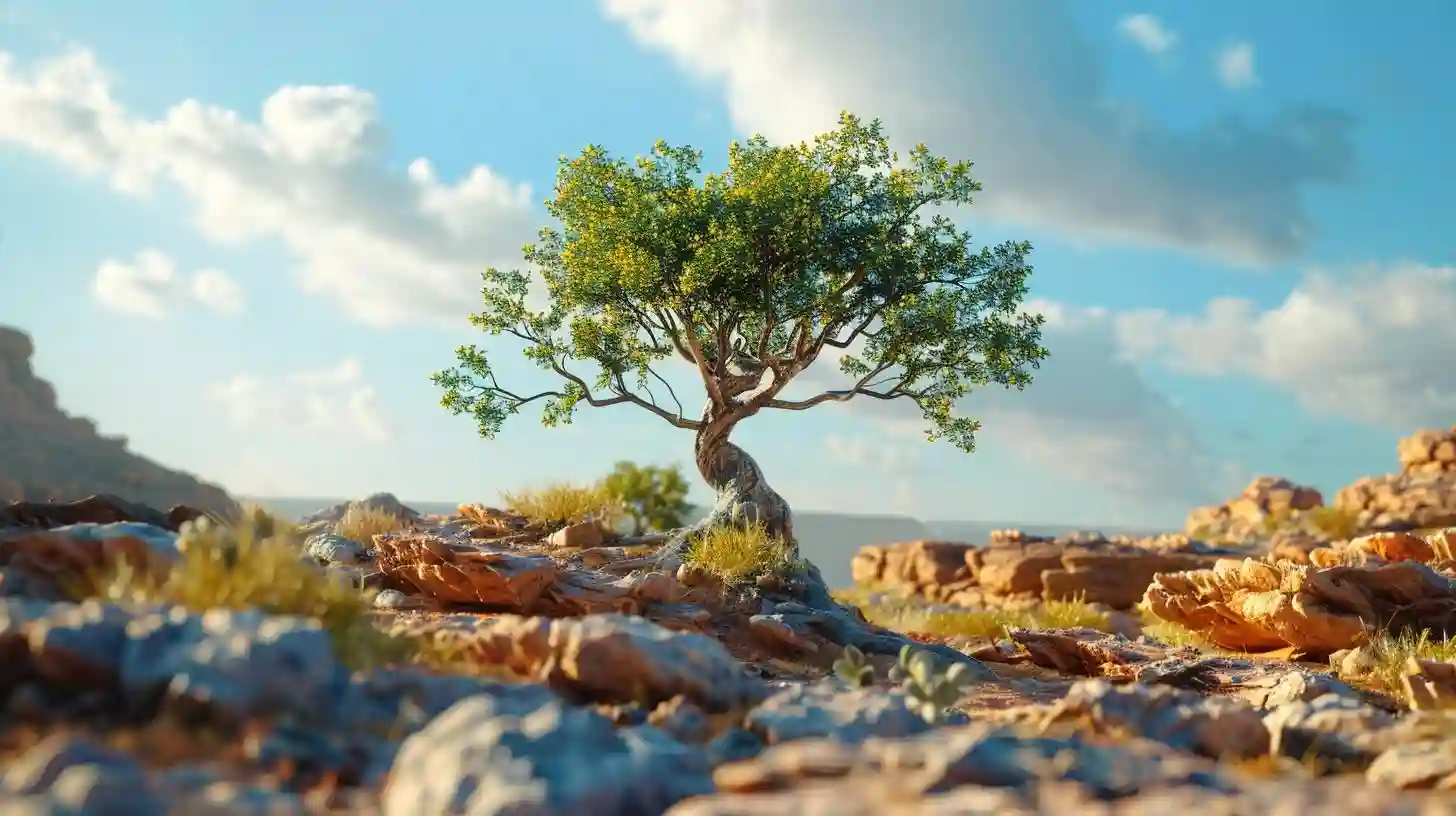
The Desert Hero Tree, scientifically known as the Acacia ehrenbergiana, is a remarkable species endemic to the arid regions of the Middle East and parts of Africa. This tree has fascinated botanists, ecologists, and conservationists alike due to its unique adaptations and its vital ecological role in desert ecosystems. The Desert Hero Tree thrives in extreme conditions that many other plant species would find inhospitable, showcasing the resilience of life in harsh environments.
The origins of the name "Desert Hero Tree" can be traced back to its remarkable ability to withstand very high temperatures, prolonged dry spells, and nutrient-poor soils. This unique adaptation to extreme desert conditions allows it to flourish where other plants struggle to survive. Its thorns, which serve as a protective mechanism, not only help the tree to deter herbivores but also reduce water loss by creating a microclimate around the tree, thereby allowing it to maintain its internal moisture levels.
The tree possesses a distinctive morphology that is particularly well-suited to desert life. The foliage consists of feathery, finely divided leaves that can quickly respond to changes in environmental humidity and temperature. These leaves can close during the hottest parts of the day, reducing water loss through transpiration. Additionally, the Desert Hero Tree's shallow root system spreads widely, allowing it to capture moisture from rain and dew more efficiently than deeper-rooted plants.
The role of the Desert Hero Tree in its ecosystem cannot be overstated. It acts as a crucial provider of food and shelter for a diverse range of wildlife. Birds, insects, and small mammals rely on its foliage and flowers for sustenance, while many larger animals seek refuge beneath its canopy. The tree plays a critical part in the food web of the desert, contributing to the survival of various species and fostering biodiversity in an environment where every organism's existence is precious.
As it blooms, the Desert Hero Tree produces clusters of yellow powder-puff-like flowers that are not only visually striking but also serve an important ecological function. These flowers attract a variety of pollinators, including bees and butterflies, thus supporting the reproductive cycle of many organisms reliant on these plants for food. The tree's flowers eventually give way to seed pods that contain seeds capable of remaining dormant for extended periods of time, an evolutionary strategy that enhances the species’ resilience in a challenging environment. When conditions are favorable, often following infrequent rains, these seeds germinate and give rise to new life.
An interesting aspect of the Desert Hero Tree is its relationship with symbiotic organisms, particularly nitrogen-fixing bacteria. Within their root nodules, the tree houses these microorganisms, which are capable of converting atmospheric nitrogen into a form usable by plants. This relationship is particularly vital in nutrient-poor desert soils because it enriches the soil and contributes to the overall fertility of the ecosystem, thus benefitting not only the Desert Hero Tree but also its neighboring flora.
Despite its remarkable adaptations and resilience, the Desert Hero Tree faces increasing threats from human activities and climate change. Overgrazing by livestock poses significant challenges, as the constant pressure can hinder the tree's growth and reproduction. Land development projects that encroach upon its natural habitats further exacerbate the species' vulnerability. Additionally, changing climate patterns, including alterations in rainfall distribution and temperature extremes, introduce further stress on this resilient tree. As the desert ecosystem continues to evolve, the implications of these changes on the Desert Hero Tree and its role in the environment remain to be seen.
Conservation efforts aimed at preserving the Desert Hero Tree and its habitat are essential. Initiatives focused on sustainable land management practices, the establishment of protected areas, and initiatives to educate local communities about the importance of this tree can help mitigate threats. Furthermore, reforestation projects that prioritize the planting of Desert Hero Trees can restore degraded desert lands, promote biodiversity, and enhance ecosystem resilience.
The cultural significance of the Desert Hero Tree is another important aspect worth exploring. It has been revered in many cultures throughout history for its strength and tenacity and often features in folklore and tradition. Communities that inhabit regions where the tree grows view it as a symbol of endurance and survival against adversity, further demonstrating the interconnectedness of culture and ecology. Maintaining the health of the Desert Hero Tree not only preserves biodiversity but also ensures that these cultural narratives continue to thrive.
Scientific research into the Desert Hero Tree has yielded valuable insights into its potential uses. Its wood is durable and often utilized in carpentry and construction, while its leaves and seeds hold promise for various medicinal applications. The tree is also being explored for its potential in agroforestry, where it can be integrated into sustainable farming practices to improve soil health and crop yield. Such findings highlight the multifaceted benefits the Desert Hero Tree provides to humans, agriculture, and the ecosystem.
As we continue to study this fascinating species, it is crucial to adopt a holistic approach that acknowledges the interconnectedness of life in desert ecosystems. Preserving the Desert Hero Tree goes beyond merely saving a plant species; it involves protecting the delicate balance of an entire ecosystem. We learn that every organism has a role to play, and in the realm of the Desert Hero Tree, each one contributes to the rich tapestry of life in one of the Earth's most challenging environments.
The future of the Desert Hero Tree remains uncertain, but with increased awareness, collaborative conservation efforts, and sustainable practices, there is hope for its survival. This tree serves as a testament to the resilience of life and the intricate relationships that exist within ecosystems. By understanding and valuing the importance of the Desert Hero Tree, we take a step toward ensuring that the unique ecological balance of desert environments continues to endure, thereby enriching the planet's biodiversity. As the world continues to confront the challenges posed by climate change and human development, the survival of such remarkable species is dependent not only on science and research but also on the compassion and collective action of individuals around the globe. Recognizing the significance of the Desert Hero Tree and its role in fostering life in its arid domain is critical as we navigate the complex intersection of conservation, culture, and environment.