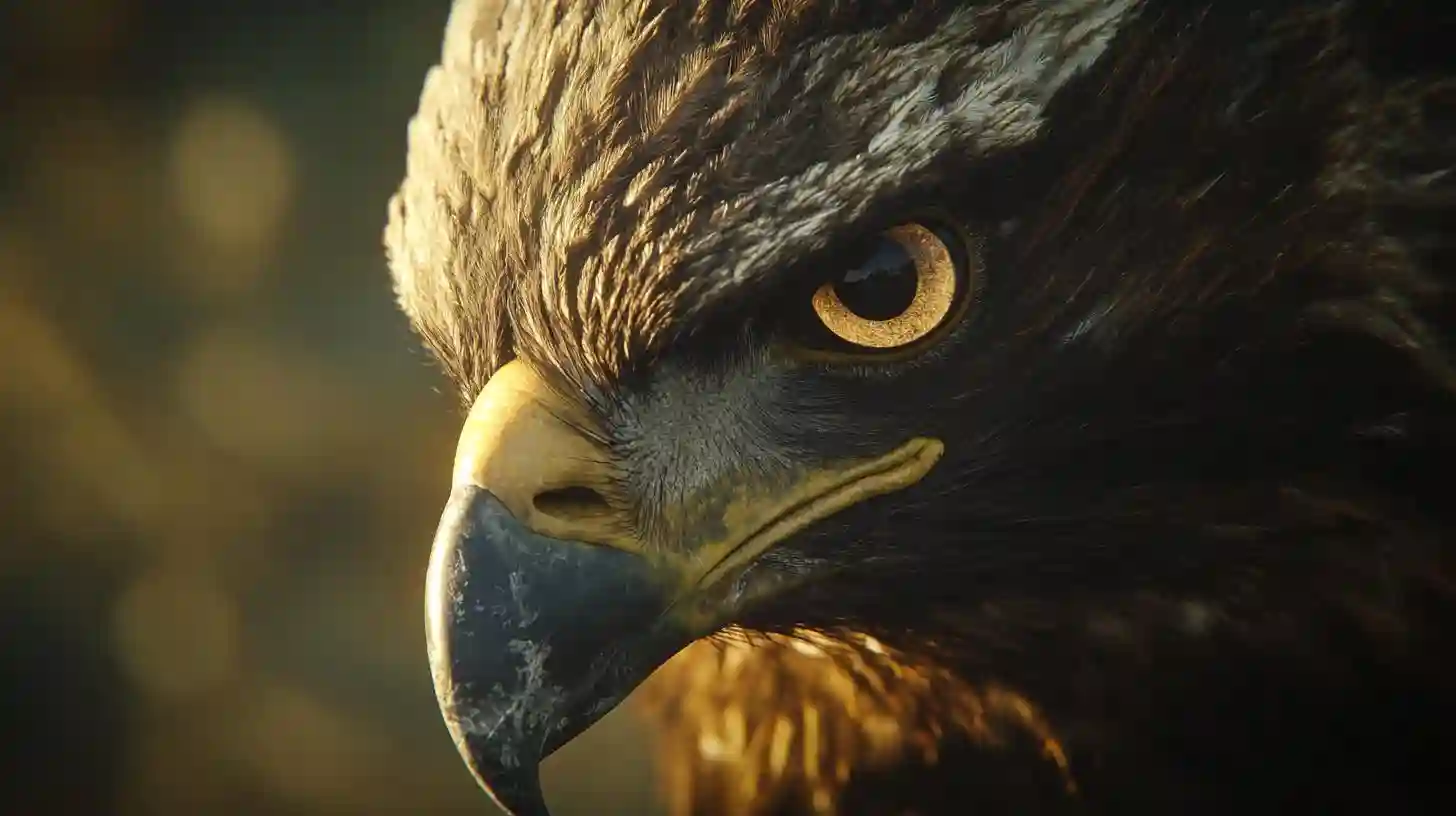
Eagles have long captivated human imagination with their striking appearance and impressive hunting skills. Among the numerous characteristics that make these birds of prey stand out, their eyesight often takes center stage. Eagles are renowned for their keen vision, and it is widely believed that all species of eagles possess sharp eyesight. However, the reality is nuanced and varies across different species.
The eyesight of eagles is remarkable, primarily due to the unique structure of their eyes. Eagles have large eyes relative to their body size, which allows for greater light intake. This anatomical feature enables them to spot prey from incredible distances. Additionally, eagles possess a high density of photoreceptor cells in their retinas, which contributes to their ability to see details that would be invisible to the human eye. In many species, their vision is adapted for detecting movement, making them incredibly efficient hunters.
Different species of eagles exhibit varying levels of sharpness in their eyesight, influenced by their habitats and hunting behaviors. For instance, the golden eagle, commonly found in various regions across the globe, is known for its exceptional vision. It can spot a rabbit or other small prey from miles away as it soars at high altitudes. The adaptability of its eyesight has made it one of the most successful hunters among birds of prey.
On the other hand, species like the bald eagle showcase specific adaptations that cater to their hunting method. Bald eagles are often associated with aquatic environments and are primarily fish eaters. Their eyesight is tuned to spotting fish swarming in the water below, with a sensitivity to the movement and shimmer of their sleek bodies as they swim. This specific adaptation highlights that not all eagle species possess uniformly sharp eyesight but rather develop vision tailored to their ecological niches and hunting strategies.
The variation in vision becomes even more pronounced when considering eagles that inhabit different environmental conditions. Eagles that thrive in dense forests might not require the same level of acute long-range vision as those that soar above open plains. The species that dwell in forests may rely more on different visual cues to navigate their cluttered surroundings amidst branches and foliage. Their eyesight is still sharp, but it may not exhibit the same precision over vast distances compared to their open country counterparts.
Research has shown that the visual acuity of certain eagle species can be extraordinary. It has been suggested that some eagles may have the ability to see ultraviolet light, which is invisible to humans. This advanced visual capability could aid eagles in detecting urine trails left by prey animals, giving them an additional edge when hunting. Such adaptations underline the specialization of eagle eyesight across different species, further affirming that their abilities are not uniform but intricately linked to their lifestyles.
Environment and prey selection also influence the development of eyesight in eagle species. Some eagles hunt primarily on the wing, relying on their ability to glide and spot prey from the air, while others may adopt a more ambush-style hunting approach. Eagles such as the African fish eagle have adapted their vision for both hunting from the air and diving toward the water, showcasing versatility in their capabilities. This variability indicates that while sharp eyesight is a hallmark of eagles, the degree to which it manifests can significantly differ among species.
Moreover, the physiology of an eagle’s eye is tailored to their lifestyle. The placement of their eyes allows for a wide field of vision, enabling them to scan for potential threats while also keeping an eye out for prey. The ability to judge distances with precision is equally important, as it plays a crucial role in their hunting technique. The unique evolutionary pressures faced by each species have guided these adaptations, leading to variations in visual acuity that reflect their ecological roles.
The fascination with eagle eyesight continues to drive scientific inquiry. New techniques in studying avian vision shed light on the specific adaptations present in various eagle species. These investigations help enhance our understanding not only of eagles but also of the complex ecosystems they inhabit. The exploration of how different eagles see the world illuminates the intricate ties between vision and survival in nature. As research advances, more will be learned about the intricate details of how each eagle species has adapted its eyesight to thrive in its particular environment, further enriching the narrative of these majestic birds of prey. The visual capacities of eagles serve as a reminder of the wonders of evolution and the diverse adaptations that exist within our natural world.